
Mike Prenesti, The Mortgage Jedi
16 years helping Las Vegas homebuyers find the right loan. NMLS #1033445.
Buyers watch rate headlines like a stock ticker, reacting to every daily tick without understanding what is actually driving the number. Here is what really moves your mortgage rate.
Your Rate Follows the 10-Year Treasury, Not the Fed
This is the single most misunderstood part of rate trends. Mortgage rates track the 10-year Treasury yield far more closely than the Federal Reserve's benchmark rate. The Fed's decisions influence short-term borrowing costs and broader market sentiment, but your 30-year mortgage rate is priced off longer-term bond markets, which respond to inflation expectations, economic growth data, and investor demand for safety.
A Fed rate cut does not automatically mean your mortgage rate drops. Sometimes rates move the opposite direction of what the Fed just did, because bond markets had already priced in the decision before it was announced.
Inflation Data Is the Real Headline to Watch
Every major inflation report, CPI, PCE, tends to move mortgage rates more than almost any other single data release. Lower than expected inflation generally pushes rates down, since it suggests the Fed has less pressure to keep monetary policy tight. Higher than expected inflation tends to push rates up for the opposite reason.
Employment Data Matters More Than People Realize
Strong jobs reports can push rates up, since a healthy labor market suggests continued economic strength and less urgency for the Fed to ease policy. Weak jobs reports can push rates down, since they signal a slowing economy. Watching the monthly jobs report is a genuinely useful habit for anyone trying to understand rate direction.
What Moves Rates Day to Day vs. What Moves Them Long Term
Daily rate movement is often just market noise, small reactions to minor data points or geopolitical headlines. The bigger, more durable trends come from sustained shifts in inflation data, Fed policy direction over multiple meetings, and broader economic conditions playing out over months, not days.
Why Trying to Time the Bottom Rarely Works
Nobody, including professional bond traders, consistently predicts the exact bottom of a rate cycle. Buyers who wait for the perfect rate often end up waiting through home price appreciation that erases any benefit from the eventual rate improvement. The stronger strategy is understanding today's rate, locking with intention when you are under contract, and refinancing later if rates genuinely improve.
What I Actually Watch, and What I'd Suggest You Watch Too
The 10-year Treasury yield, monthly inflation data, and the monthly jobs report are the three things that actually move the needle. Everything else is mostly noise dressed up as a headline.
Let's Talk About Where Rates Stand Today
Rate trends are useful context, but what actually matters is your specific rate on your specific loan today. Let's talk through what current conditions mean for your situation.
Get started here or book a call and let's cut through the headlines together.
Have questions about your situation?
Let's talk it through. No pressure, no obligation.
Book a Free ConsultationRelated Posts
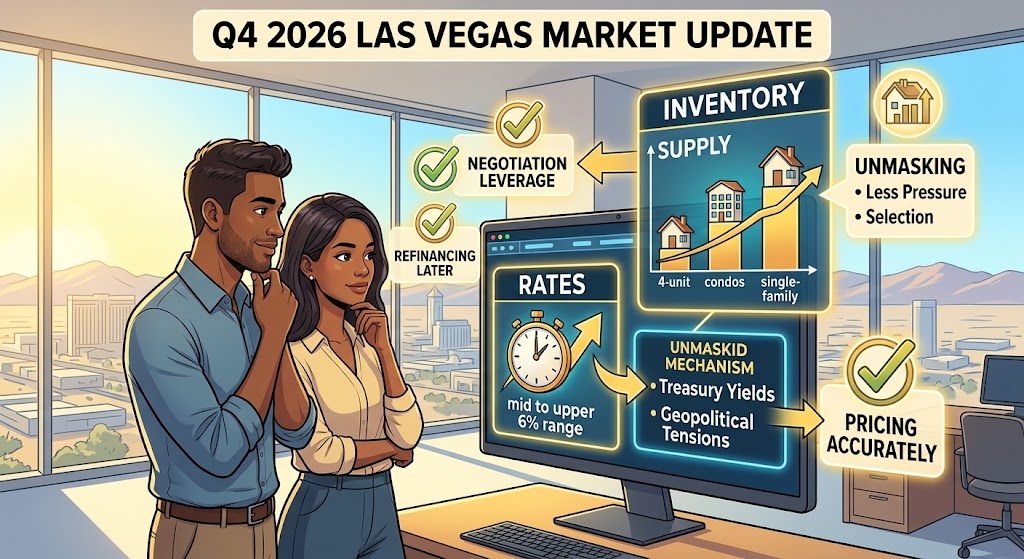
Q4 2026 Market Update: Where Rates and Inventory Actually Stand Right Now
Rates sit near a one-year high and inventory keeps climbing. Here is an honest look at what that combination actually means for buyers and sellers heading into Q4.

Las Vegas Housing Market: What Buyers Need to Know in 2026
A broader look at where the Las Vegas market stands this year, what's driving it, and what buyers should actually be paying attention to.

How Long It Really Takes to Close a Mortgage, Week by Week
From signed contract to keys, here is what happens each week, what slows each step down, and what you can do to keep your closing on schedule.